
CORE TECHNOLOGY PLATFORM
Three Core Technologies Across Membrane Separation Engineering
Plum organizes PEK tubular membrane pretreatment, selective nanofiltration, and HRCC continuous concentration as independent or combinable technology modules around feed risks, target streams, and downstream interfaces, rather than as one fixed flowsheet that must always be reproduced in full.
Whether a project uses one, two, or all three technologies depends on feed composition, fouling and scaling risks, separation objectives, and final stream destinations.
TECHNOLOGY PLATFORM MAP
Identify the engineering risk before deciding where a technology belongs
This map defines technology duties and interfaces. It does not mean every project requires every section, and industrial wastewater and production fluids do not share one parameter set.
- 01Water / process-fluid assessment
Confirm source, variation, contaminants, target components, and downstream requirements.
- 02Front-end conditioning & solids separation
Use reaction conditioning and PEK tubular membranes where required to establish a controlled feed boundary.
- 03Selective separation & purification
Use membrane screening to define the two-stream relationship among targets, impurities, and the salt system.
- 04Continuous concentration where required
Use HRCC to organize continuous RO concentration after pretreatment and feed-quality gates are satisfied.
- 05Downstream interfaces
Reuse, resin, evaporation, crystallization, drying, or another project-defined final destination.
Combination principle:A technology enters the route only when it solves a defined project problem, not to complete a nominal full technology chain.
THREE ENGINEERING MODULES
Each technology controls a different engineering risk
Each technology states what it addresses, what it does not address, and which inputs it requires, keeping products, process solutions, and core technologies distinct.
PRETREATMENT & SOLID-LIQUID SEPARATION
PEK Tubular Membrane Pretreatment & Solid-Liquid Separation
Separate reaction solids, suspended matter, and compatible foulants under chemical-conditioning, high-solids, high-fouling, and demanding cleaning duties to establish a controlled feed for downstream membranes or resource recovery.
- Primary duty
- Solids separation for reaction solids, SS, colloids, oil, and highly fouling feeds
- Does not replace
- Dissolved-salt removal, complete organic treatment, or downstream refining
- Required inputs
- Contaminant form, conditioning, temperature, pH, cleaning, and downstream requirements
SELECTIVE SEPARATION & FRACTIONATION
Selective Nanofiltration & Fractionation
Use size, charge, and feed-membrane interactions to establish project-specific passage, retention, and fractionation relationships in industrial wastewater salt systems and production-fluid target components.
- Primary duty
- Target-component fractionation, impurity control, salt separation, and purification interfaces
- Cannot be assumed
- Which side is the product, a fixed separation ratio, or salt quality
- Required inputs
- Complete composition, target stream, analytical method, material balance, and downstream operations
CONTINUOUS RO CONCENTRATION
HRCC Continuous High-Concentration Reverse Osmosis
For suitably pretreated water and brine, organize continuous RO concentration through modular operation, online operating-state changes, and a complete water balance, then connect the section to reuse or a terminal process.
- Primary duty
- RO permeate recovery and concentrate minimization for compatible feed water
- Does not replace
- Front-end softening, organic control, evaporation and crystallization, or concentrate disposal
- Required inputs
- Scaling risk, organics, salt composition, operating pressure, and concentrate endpoint
TWO APPLICATION PATHS
One technology platform, different duties in two business areas
Industrial wastewater starts from risk control and final destinations; process fluids start from target components, product quality, and downstream production operations.
Industrial Wastewater Reuse, Minimization & ZLD
- Conditioning and PEK solids separation where required
- Selective NF routing according to the salt system
- HRCC concentration only after feed-quality gates are met
- Connect to reuse, evaporation and crystallization, or disposal
Production-fluid clarification, fractionation & purification
- Define clarification or pretreatment around the target component
- Use selective NF to establish the two-stream relationship
- Use a project-specific concentration membrane section
- Connect to resin, chromatography, evaporation, or crystallization
Process-fluid projects do not use HRCC by default, and industrial wastewater projects do not use the complete three-technology chain by default.
COMBINATION SCREENING
Five input groups determine how technologies are combined
Technology-route screening starts with project inputs and is narrowed through sample testing, continuous pilot validation, or relevant engineering evidence.
VALIDATE BEFORE SCALE-UP
Technology combinations require evidence, not assembled universal parameters
When feeds are complex, target components are sensitive, or interfaces are uncertain, sample and pilot testing confirm membrane selection, stream identities, fouling and cleaning, water or material balances, and scale-up inputs.
- 01Data review
- 02Membrane & route screening
- 03Bench material balance
- 04Continuous pilot validation
- 05Scale-up design inputs
CROSS-BUSINESS EVIDENCE
Cross-business records show how each technology enters an engineering route
Only confirmed capacities and technology sections are shown. Customer identity, performance, and new-project guarantees are not inferred here.
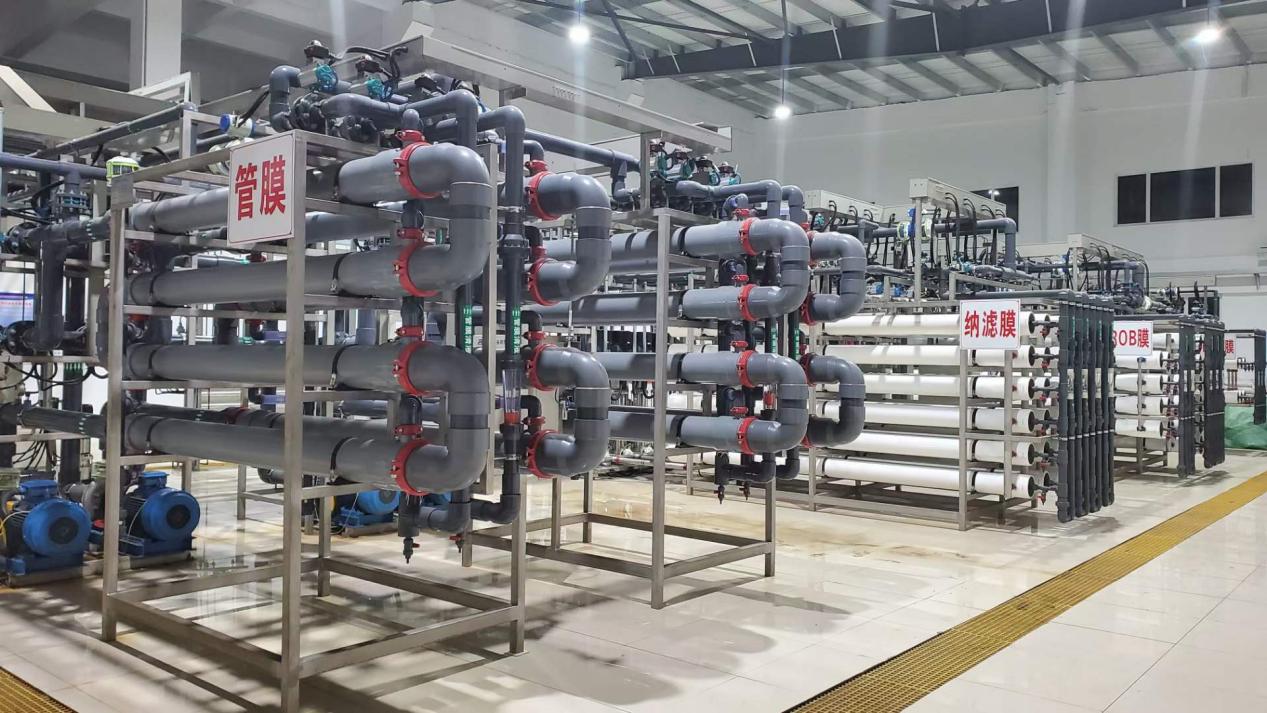
Reaction conditioning and PEK tubular membrane solids separation.
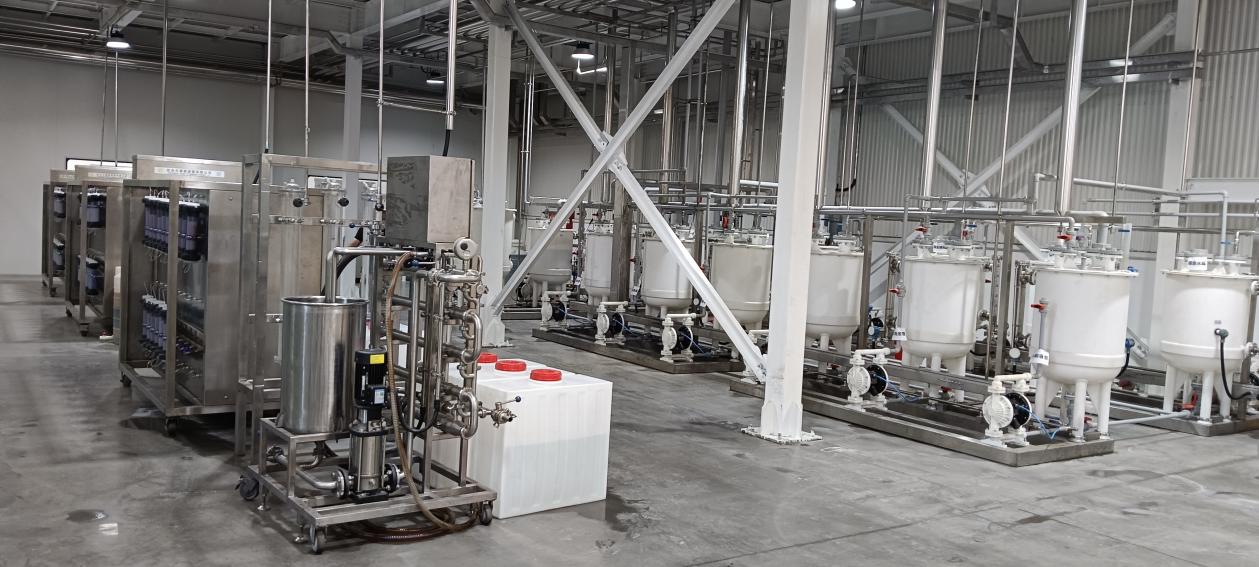
Selective NF fractionation and downstream refining interface.
PEK pretreatment and an HRCC RO section.
ENGINEERING FAQ
Core technology platform frequently asked questions
This overview screens technology duties and combinations. Parameters, equipment, and performance boundaries belong in the relevant detail page and project validation.
Must the three technologies be used together?
No. They may be used independently, in pairs, or as a complete chain where appropriate. Feed risks, separation objectives, downstream interfaces, and validation results determine the route.
Can PEK tubular membrane pretreatment remove dissolved salts directly?
No. It primarily separates reaction solids, suspended matter, and compatible foulants. Dissolved-salt control requires suitable NF, RO, or another process section.
Is selective NF permeate always the product stream?
Not necessarily. The target component may be in the permeate or retentate and must be confirmed through sample analysis, membrane screening, and a material balance.
Is HRCC suitable for every brine or production fluid?
No. HRCC requires suitable pretreatment, fouling and scaling control, membrane compatibility, and a defined concentrate endpoint. Suitability for a process fluid requires separate validation.
When are sample testing or pilot validation required?
Use sample testing and continuous pilot validation when component relationships, fouling and cleaning, selectivity, concentration boundaries, or scale-up remain uncertain.
Why does the overview omit universal performance parameters?
Operating windows and results depend strongly on the feed, pretreatment, and objective. Project records, test data, and new-project guarantees must remain separate and be confirmed in project documents.
ROUTE EVALUATION
Submit the duty to determine which technology belongs where
Provide feed analysis, treatment objectives, the current process, and final destinations for an initial review of technology duties and route combinations.